Logistics website design.
Made clear.
Show what you move, where you operate and how customers can request a quote through an editable WordPress website.
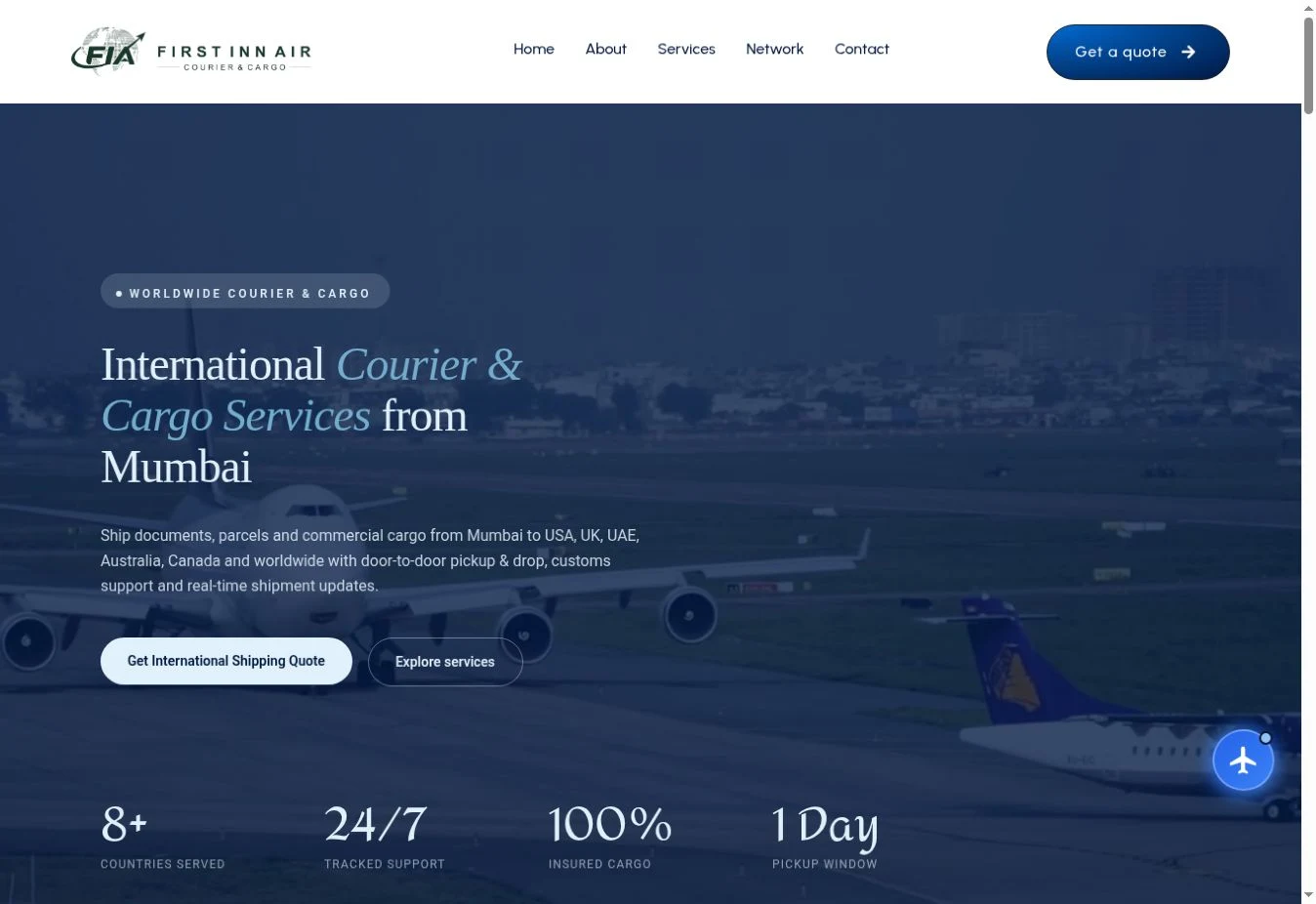
First Inn Air.
Explore a logistics-sector website in the DigiCrafts portfolio. First Inn Air provides a real project reference when discussing the presentation of your own freight or cargo business.
Bring examples of the services and routes you need to explain. We can use them to shape a website brief that fits your operation.
Turn a service list into a useful journey.
A freight buyer needs to understand whether your business can handle the shipment before starting a conversation. A useful logistics website makes the service type, operating coverage and enquiry route clear. It should help someone distinguish between your capabilities without making them work through an unstructured wall of text.
DigiCrafts designs WordPress websites for logistics companies, freight forwarders and cargo businesses. We operate from Delhi and Mumbai and work remotely with clients across India and Europe. The website scope follows the services you actually offer, the content you can verify and the systems you already use.
Structure around the shipment enquiry.
Distinct service pages
Organise air freight, ocean freight, road transport or warehousing only where they are part of your operation. Explain what each service covers, relevant limitations and the information needed for a quote.
Accurate coverage information
Describe the regions or routes you genuinely serve. Use your approved office and partner information. A map or country list should clarify coverage rather than imply offices you do not have.
A useful quote brief
Plan fields such as origin, destination, cargo description, approximate weight, dimensions and preferred date when relevant. Agree which details are required and who receives the enquiry.
Evidence customers can review
Use approved company photographs, documents and verified memberships where available. Keep credentials current and avoid suggesting a certification applies to a service unless you have confirmed it.
Plan integrations before promising them.
A public website and a shipment-management system serve different purposes. A tracking button can link to an existing provider; a custom tracking interface needs a documented data source, access and a separate integration scope. The same applies to live pricing and customer account features.
Before quotation, share the name of your existing tracking, booking or customer-management platform. We can then review whether a simple link, embedded tool or custom connection is appropriate. Visitors should understand when they are requesting a quote rather than receiving a confirmed shipping price.
For the initial enquiry, collect the information your team actually needs to respond. If document uploads are required, file types, size limits and handling need to be agreed. A short public form should not try to replace the entire operational booking process.
An editable website for changing operations.
Routes, team contacts and service information change. WordPress and Elementor allow your team to update the agreed content areas without rebuilding the site. Reusable layouts help new service pages stay consistent with existing ones.
We review navigation, headings, image descriptions and page titles as part of the agreed build. Each service page should answer a distinct question. For an existing site, our website redesign process also considers content migration and changed URLs.
To prepare a useful brief, send your current website, service list, coverage information, approved photographs, integration requirements and preferred launch timing. Include who will review technical descriptions so the final pages accurately represent the business.
Logistics website questions.
Can you design a freight forwarder website?
Yes. We plan the pages around your verified freight services, coverage and enquiry process, then build the agreed WordPress website.
Can shipment tracking be added?
An existing tracking link can be included. A custom tracking integration depends on your provider, its API access and the agreed development scope.
Can the quote form ask for shipment details?
Yes. We can agree relevant fields such as origin, destination, weight and dimensions. Live rate calculation is a separate requirement from collecting an enquiry.
Will our team be able to update services?
Yes. The agreed WordPress and Elementor content is editable. We clarify any custom integrations and ongoing licences during planning.
Explore the right service.
How can a freight quote form reduce missing shipment details?
For a freight-forwarder website, agree the minimum useful brief with the operations team: origin, destination, transport mode, package count and the units used for weight and dimensions. Let a buyer state that a value is not yet known instead of forcing an invented answer. A 3PL warehouse enquiry may instead need storage type, approximate volume and fulfilment requirements.
Keep those routes separate where the business offers both. Explain that a submitted request is awaiting review rather than presenting it as a confirmed rate. If a CRM handoff is required, map the shipment fields and test how staff receive attachments and follow-up details before launch.
Plan your logistics website.
DigiCrafts operates from Delhi & Mumbai, working with businesses across India and Europe. Share your website, priorities and preferred timing.