CASE STUDIES / PEARL INFRATECH
Pearl Infratech: Equipment Rental Website Case Study
An equipment-led website that introduces lifting services and gives visitors a route from fleet discovery to a business enquiry.
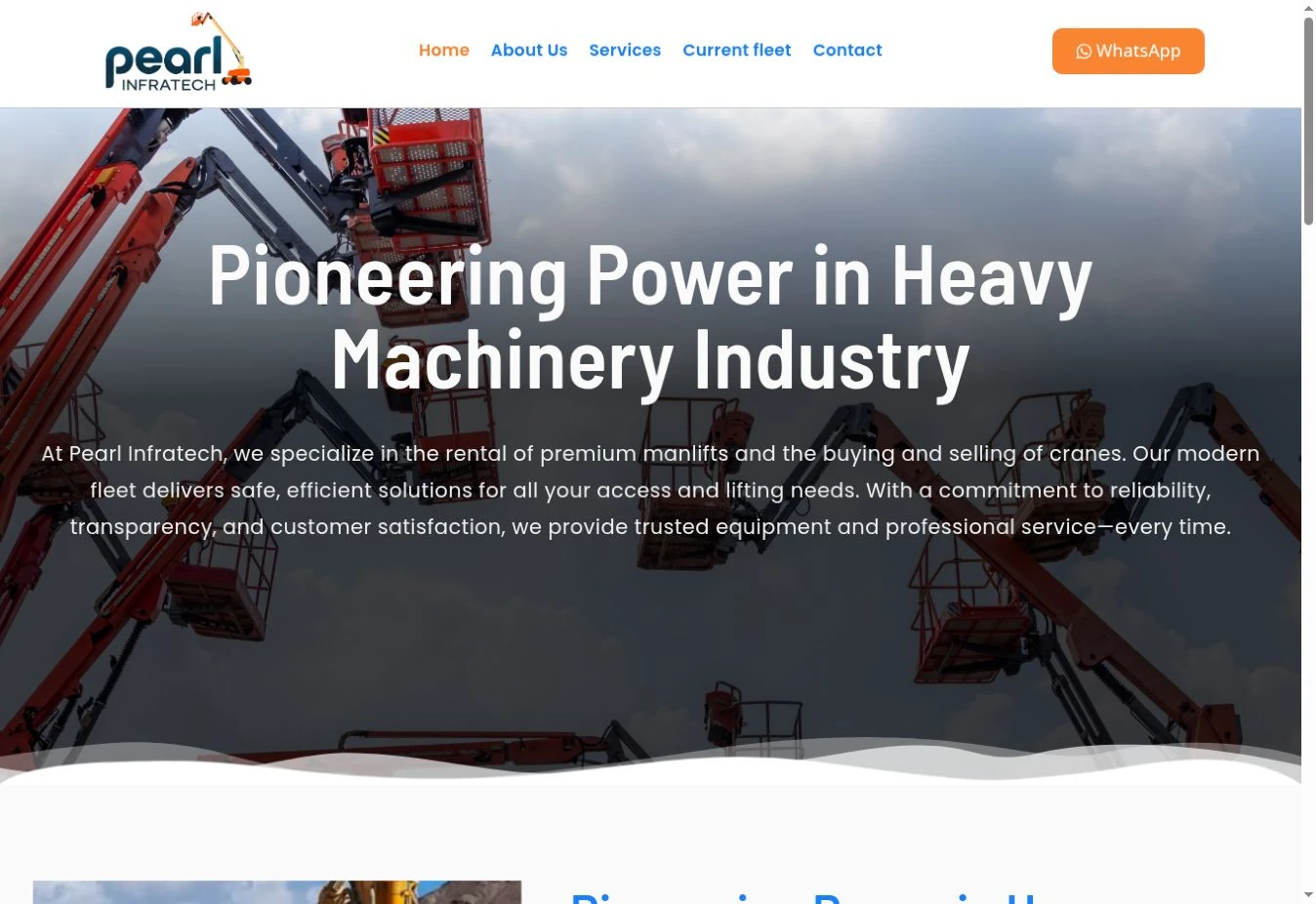
01 / Start with the equipment requirement
Pearl Infratech presents manlift rental and crane buying and selling. Its website includes service information, a current-fleet route and contact options. Featured equipment includes model names and working-height information, making the catalogue more specific than a general list of services.
The design centres the equipment offering and gives fleet information a direct place in the navigation. Company information supports that journey rather than replacing it.
02 / Why fleet-led navigation matters
For an equipment buyer, the first question is often practical: can this supplier help with the type of machine required? A fleet-led structure gives that question a clear starting point. A visitor looking for a particular model should not have to work through a long company introduction to discover whether it is represented.
Service information and equipment information serve related but different purposes. Services explain the relationship a business can offer; fleet content helps someone narrow a technical requirement. Keeping both routes visible makes the website more useful to people arriving with different levels of knowledge.
03 / Specific names make the next conversation clearer
Machine names are stronger navigation labels than repeated generic phrases such as “our solution.” Where equipment information is available, the interface should preserve it in headings and descriptions instead of hiding it entirely inside an image.
The design principle is to give the visitor enough context to ask a precise question. A model reference or a relevant equipment characteristic can anchor that conversation. The website should not imply that a listed machine is available for a particular date unless availability is actually confirmed by the business.
04 / A website that leads to an enquiry
The published site offers contact and WhatsApp routes alongside its equipment presentation. That suits a journey where the final requirement may depend on a project location, dates and working conditions rather than a standard retail basket.
For a similar rental website, the enquiry handoff should keep the equipment context intact. A buyer can then discuss the relevant machine and the site requirement together. Rental terms, delivery arrangements and suitability remain matters for the supplier to confirm; a persuasive page should not conceal those dependencies.
05 / Visual hierarchy for an industrial audience
The project preview places machinery and service presentation at the centre of the page. Equipment imagery gives visitors a recognisable subject, while the surrounding text provides a route into the offering.
For industrial websites, visual clarity is not the absence of character. It means giving technical labels enough space, using images to show the subject honestly and keeping the next action easy to find. A dramatic image works best when the visitor can still identify what the business provides.
06 / What this case demonstrates
Pearl Infratech illustrates a fleet-first approach to an equipment business website: introduce the offering, expose equipment information and provide an enquiry route. It is a distinct use case from a fashion checkout or a food catalogue with a multi-product enquiry list.
The takeaway is to build around the customer’s selection process. A clear fleet presentation gives visitors a useful starting point for that conversation.
A similar challenge for your business?
Explore our equipment rental website design service or tell us about your project. DigiCrafts operates from Delhi and Mumbai and works remotely with businesses in India and internationally.
Visit Pearl Infratech ↗ · View our portfolio · Explore all case studies